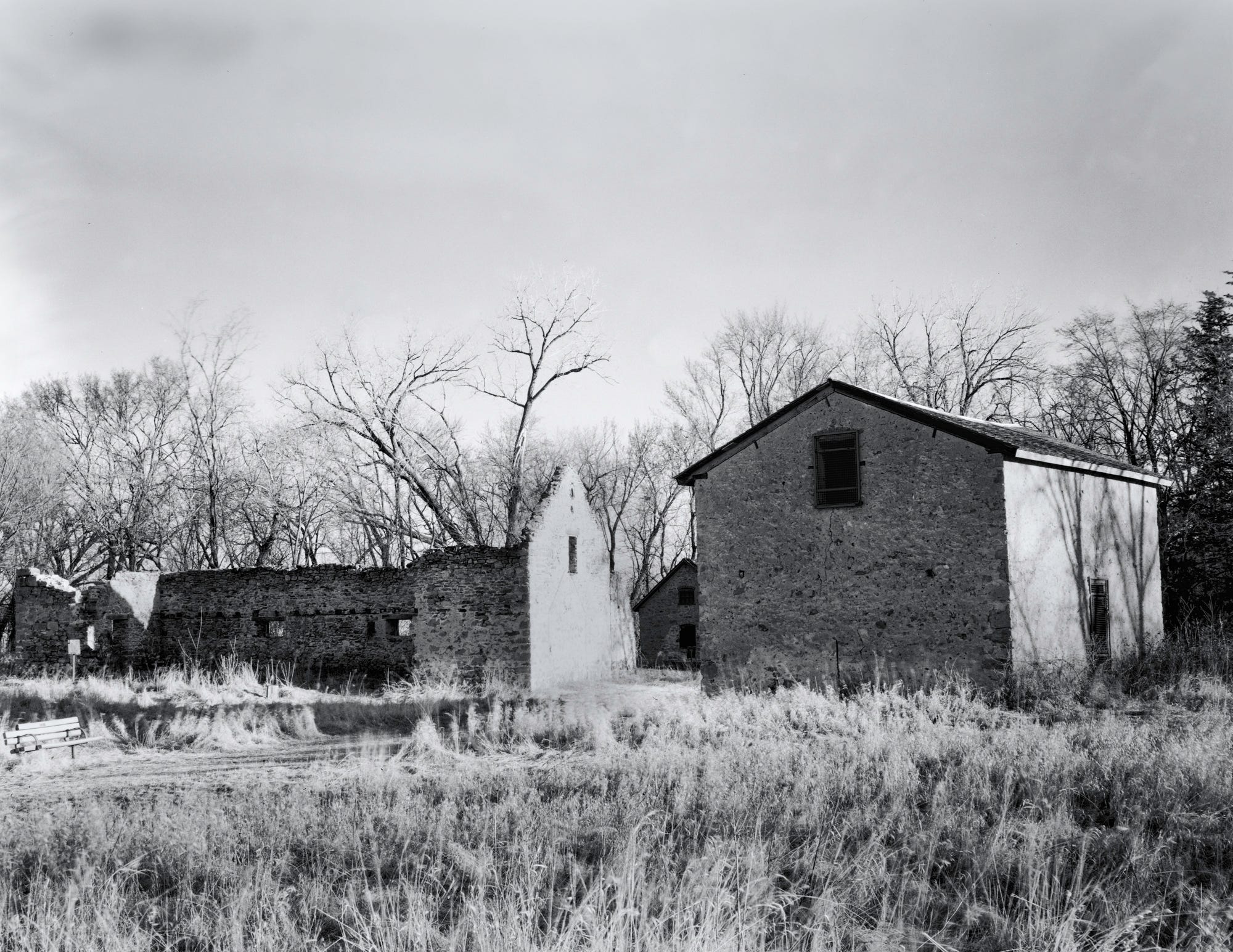
I thought I was done learning for the week, but that was not to be the case. Jacquelyn and I went for a walk over a weekend to make some photographs of Jabs Farm.
Jabs Farm is a crumbling relic of a bygone farming era in the Minnesota River valley. Modern industrial and residential housing development combined with climate change has irrevocably changed the valley’s topology. Each spring, the valley floods as the west Minnesota snow melts, channelling the water eastwards towards the Mississippi River. The resulting annual floods impact not just the trees and soil but also the viability of farming along the river banks.
The land that was once Jabs Farm is now managed by the National Forestry Service and is part of the patchwork of land that makes up the Minnesota River Valley Wildlife Preserve. Criss-crossed by hiking trails, the preserve offers a wonderful environment for nature or landscape photographers.
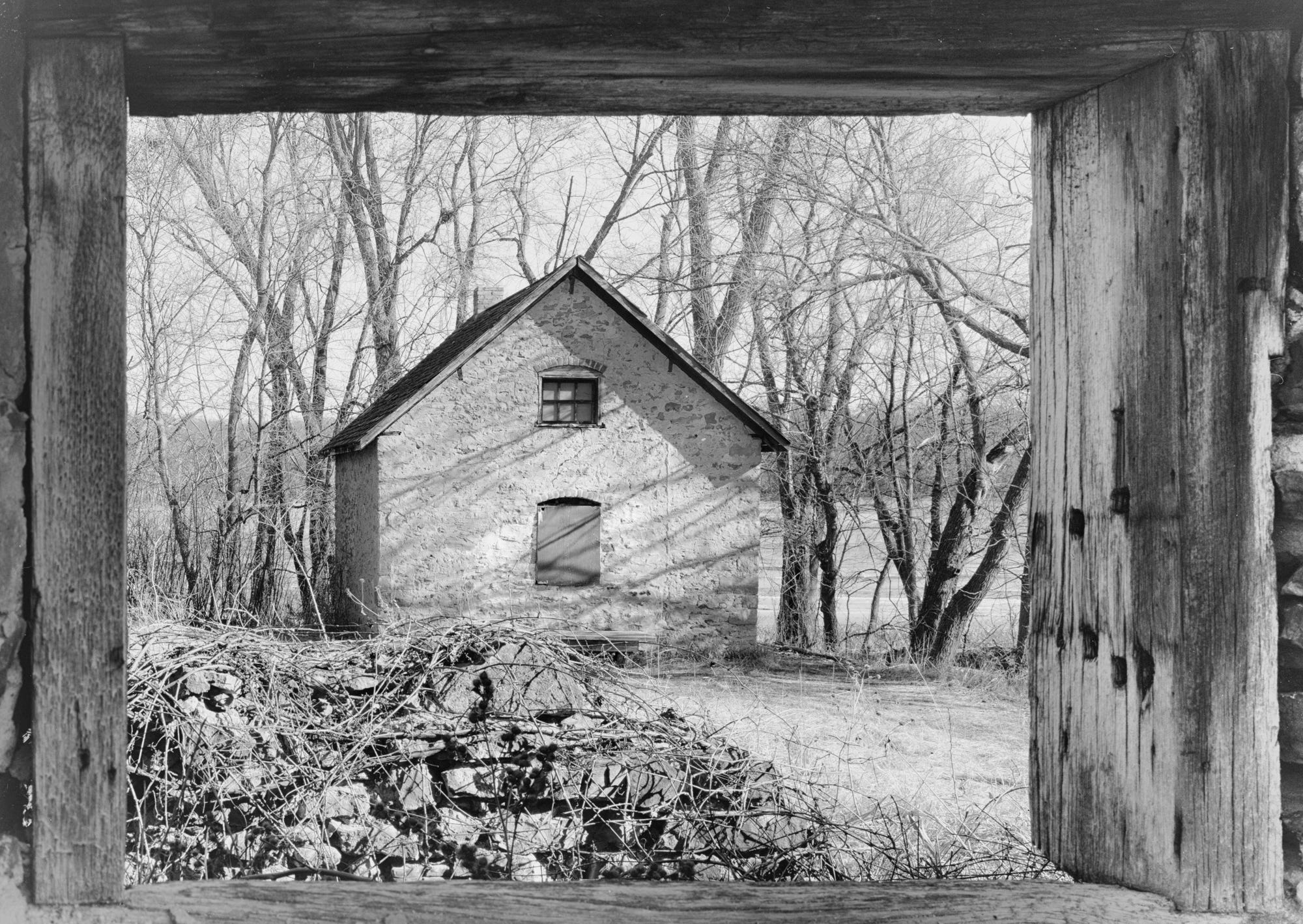
I was using this visit to make some photographs for a class project for Travel Photography, an elective class for my MA program at school. The farm building ruins provide a unique opportunity to capture the essence of the past utility of the area. Three buildings remain on the farm. One, missing its roof, still has the wooden frame of an old window, and through it, I composed the smallest of the three buildings. I was pleased with how this photograph turned out. I used f/45 to allow a considerable depth of focus, hoping to capture the window frame and the building in focus. I was surprised it worked. The frame within a frame is always a pleasing composition.
In my second composition, I positioned the three buildings with the lovely soft grass in front and the trees and sky behind. The sky was bright and plain. I added a graduated ND filter to the sky to reduce the range of tones and used a red filter to darken the blue. Having popped the film holder into the back of the camera, I slid out the dark slide, only to immediately realize my mistake and slide it back again a few seconds later. I had forgotten to close the shutter first. The sheet of film was ruined.
The large format lenses that I use have two shutter levers. One fires the closed shutter open, then closes it again using a clock mechanism to time the opening. The other closes or opens the shutter mechanically. You keep the shutter open while composing and focusing on the scene. The process is then to close the shutter and test fire the shutter mechanism – remember, these lenses and shutters are over fifty years old, and so, like me, they are getting a little long in the tooth and prone to errors.
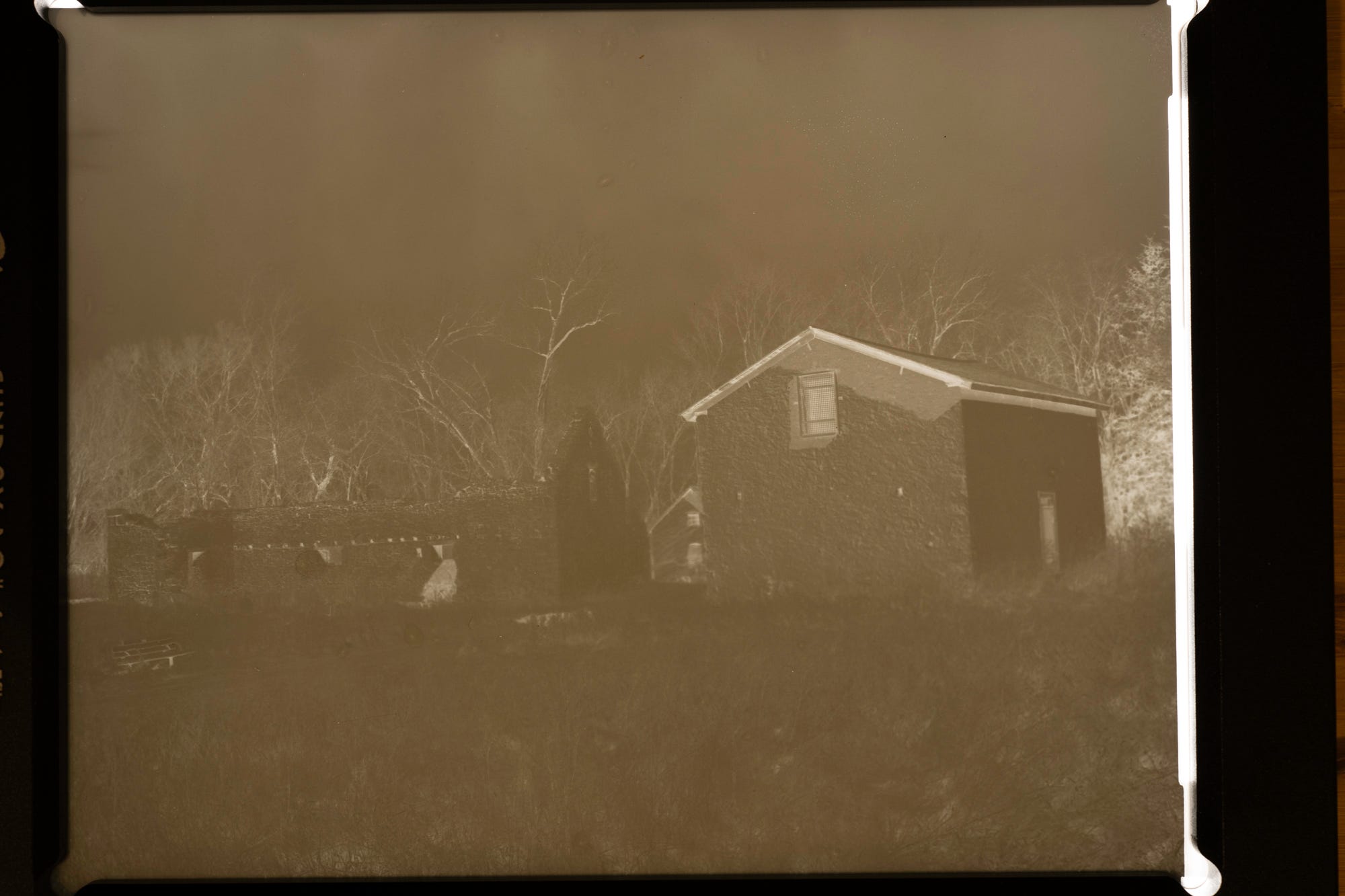
Having ruined the film by unintentionally [over] exposing it, I packed up, and we headed home. Not only was it my mistake not to close the shutter, but my second mistake of the day was to bring two sheets of film. There were no second chances that day.
Rule #3: Always bring extra sheets of film.
You can read about my first mistake and subsequent rule here: Large format photography mistake – by Christopher Crowhurst