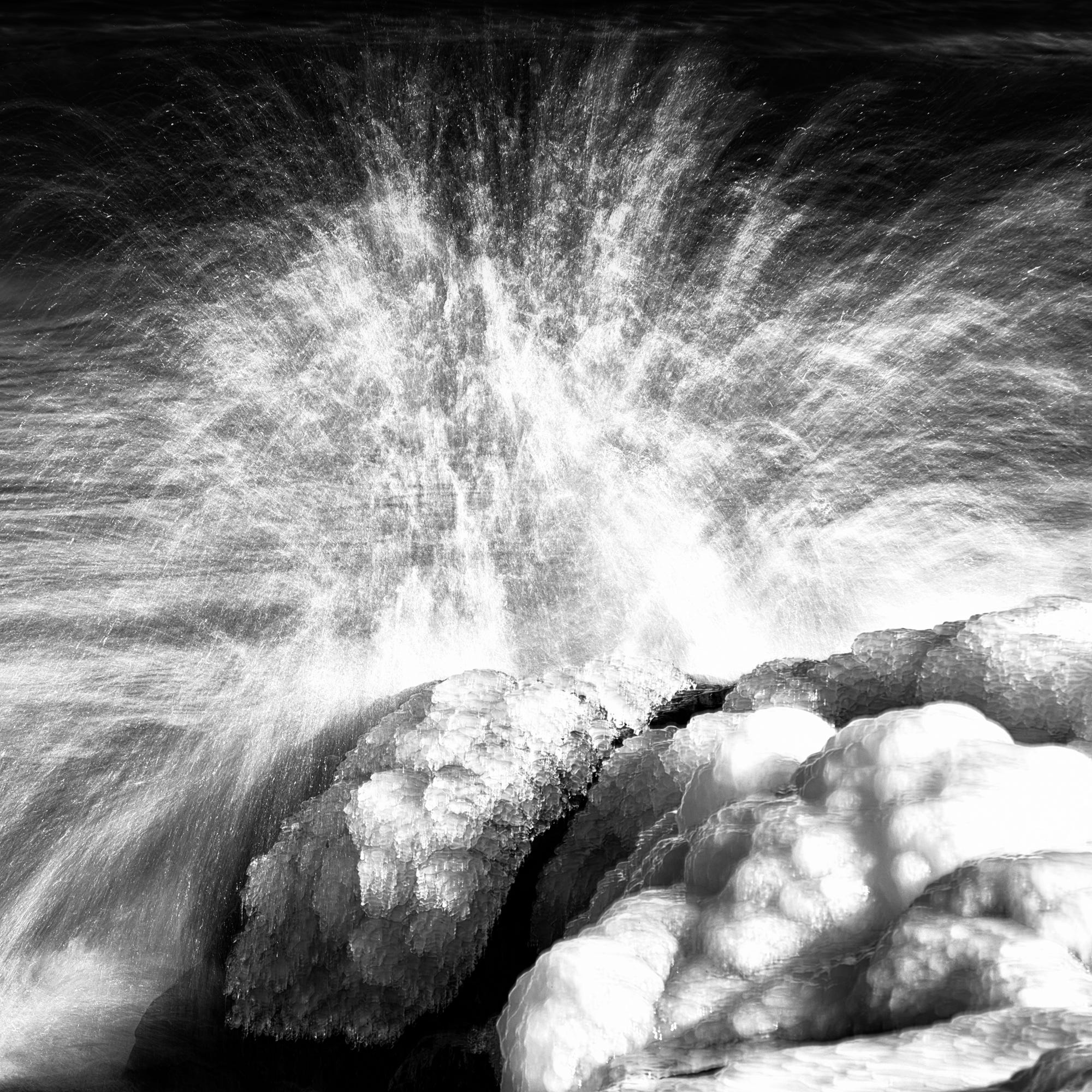
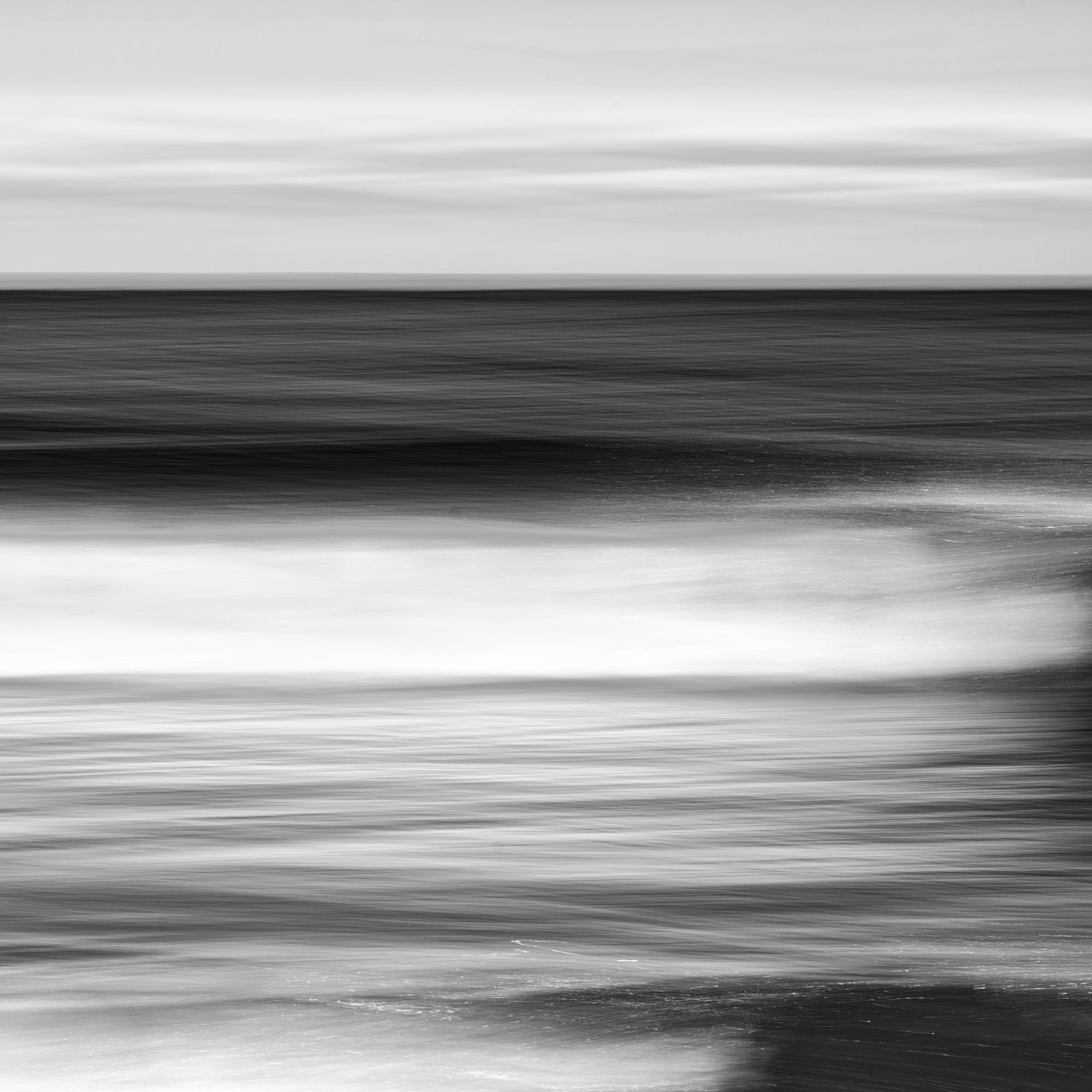
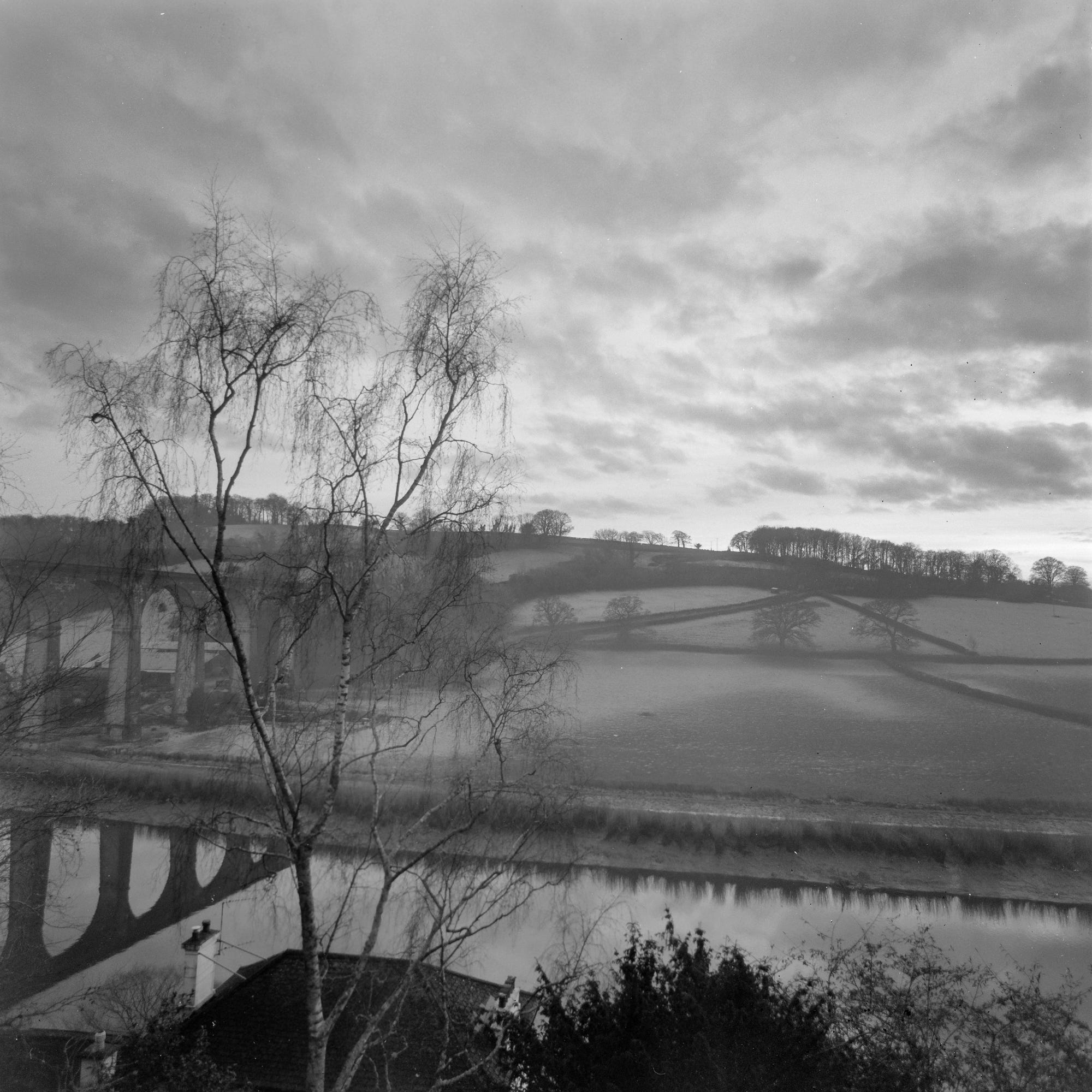
One of the many joys of studying photography at university is being pushed to go outside your comfort zone. This past week, I was required to shoot the same scene in three styles so that it would appear that three different photographers made the images. I used this as a chance to experiment; I stayed comfortable for my first image, tried ICM for my second, and used a red filter to challenge our perception of tones for my third.
I used my longest lens to get close to this scene and then stacked ND filters to bring the shutter speed down: 330mm 0.4 seconds at f/13, ISO 64. This allowed me to capture the spray’s extruded time motion and create this intense visual explosion. Below the spray, beautifully sculpted ice formations have been made, rich with texture and reflecting the harsh sunlight. This image was created with an experiential outcome in mind. People who don’t live in the north rarely witness these beautiful boundary conditions in the harshest environments.
I switched to my standard zoom lens (24-120mm) for this second image and set it to 89mm. Using my tripod for horizontal stability, I added a six-stop ND filter and practised creating horizontal intentional camera movements (ICM). I found the most pleasing effect was with the shutter speed set to one-sixth of a second, as it allowed the wave definition to be visually maintained. I made this image to show how water and ice are unified at a visual and molecular level, blurring the boundaries between liquid and solid matter as the waves create and erode the ice.
In this final image, I was experimenting with using a red filter to help bring interest to what was a dull sky. Using the filter, I emphasised repeating tonal variations and interesting diagonal lines by inverting the usual dark land/water to light sky contrast. I timed the image to capture the wave breaking and curving along the shore, complementing the curved snowline on the beach. The light, dark, repeated curves bring the eye up through the image to the tip of the land, where they can explore the beautiful ice formed over the rocky promontory. The variations are not just in the tone but also the texture, first the snow, then the pebbles on the beach, then the breaking wave and then the ice floating in the water.
To capture the expanse of this view, I used my standard zoom at 24mm, f/11 1/60th of a second and base ISO.
What do you think? Did I succeed with the assignment? Let me know in the comments.
Large- and medium-format film photography feels like a different art form from digital photography. Yes, it shares the same visual language, but the tools are so different, and the aesthetic is considerably different.
The lifecycle of image capture is measured in hours or days, not milliseconds, from button press to review on the back of the camera. Instead, the film is exposed, and we, the photographer, are left imagining what we have captured.
My initial forays into the dark arts of film photography have relied on a lab to develop and scan my negatives. My rationale was the overwhelming amount I needed to learn about the camera before I delved into developing or scanning.
Recently, I decided to expand my learning into scanning, mainly because I wasn’t satisfied with the digital films the lab was sending me.
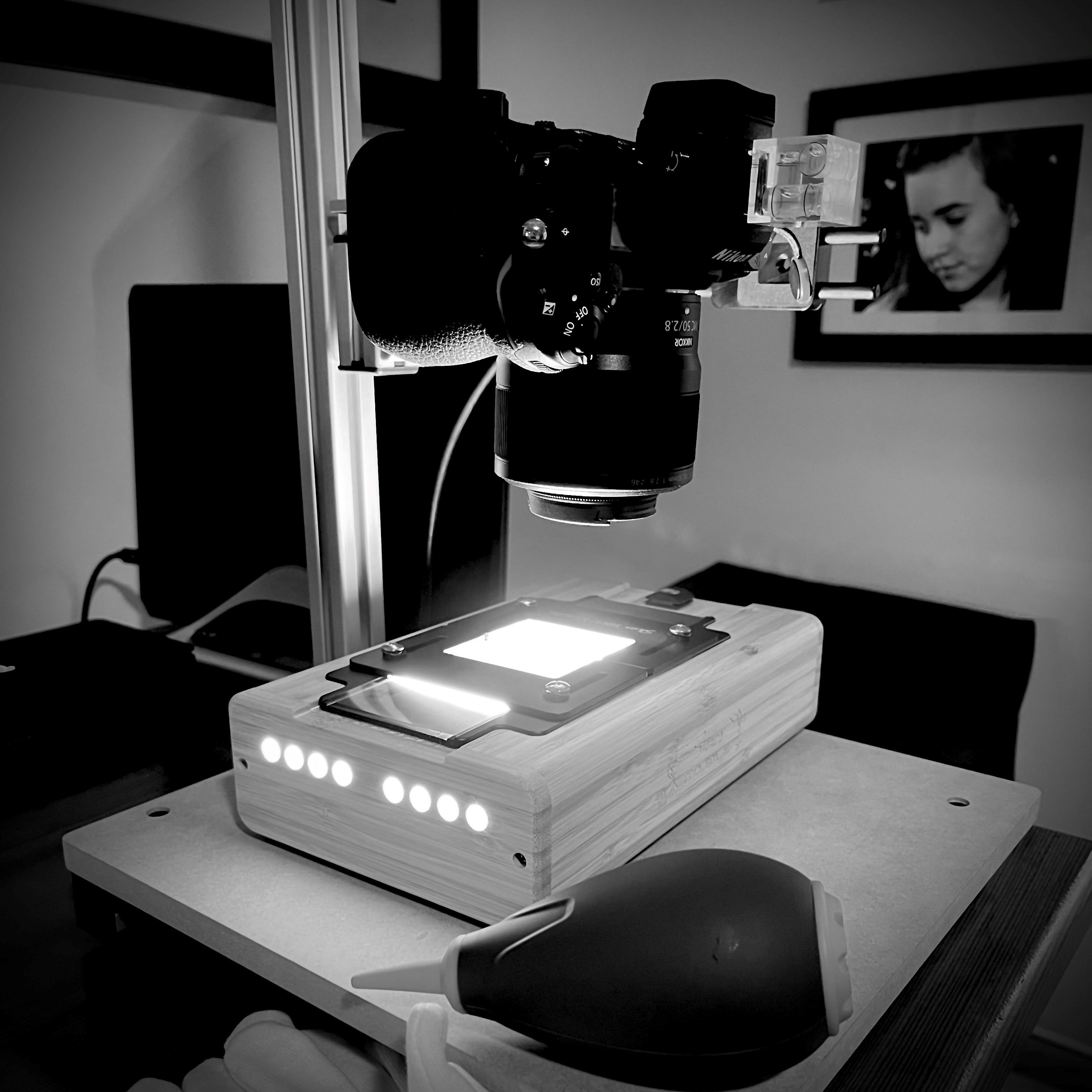
This is the first scan I created. It was a series of nine images that were taken using my Nikon Z7ii mounted on a copy stand and a Sunray light box to hold and illuminate the negative. I could have captured the negative as a single image; that is how the lab captures them. However, I was looking to explore the quality of the negative at a deeper level. By using a macro lens set to 1-to-1 magnification, the sensor was capturing images from the negative, matching the negative area to the sensor area (thus the one-to-one ratio); this required a set of three-by-three images to completely capture the image and overlap each area by enough for the software to stitch the final image together. The resulting image was 14,000 pixels wide and high. Because each pixel is captured with a vast range of tones requiring 14 Bits of digital data, the resulting image was close to 400MB!
The Über scan.
But why did I bother? When I examined the original file from the lab, I found a very finite grain that appeared when I started looking closely. Also, there was limited data, so adjacent pixels were quite different in tone. The subtlety was being lost; the data that seemed to go on forever in analogue film was missing from the scans.
Please excuse the dust on the negatives
This image shows the difference. The left half shows a zoomed-in version of the lab scan; the right is the version I created. Even more interesting is that the right image is already zoomed in twice as close as the lab scan on the left, yet still, more information is available. This higher resolution and greater tonal range allow me to edit the image by cropping or manipulating the tonal values through dodging and burning. This level of flexibility doesn’t exist in the lab scans.
Using this approach, I am scanning approximately 4500 pixels per inch. I think that is enough for now! Two significant improvements in my setup allowed these improvements in scanning. First, the macro lens, I am using a Nikkor 50mm macro lens. The macro lens is designed to have no distortion and a consistent focus across the entire image. This helps minimise the correction that needs to occur in the software when stitching the individual photos together. The second improvement was a copy stand, which holds the camera and light box rigidly, allowing for much greater focus precision and consistent exposure without altering the settings between images.
Well, that’s enough nerding out for now. I look forward to sharing more scans as I start using medium—and large-format film for school work. The semester started last week at art school, so I am head down learning and working towards the MA. I hope to share some of my projects soon.
Jacquelyn pointed out this morning how odd it was to make a film photograph, develop the negative, and then turn around and digitise it. Amongst the film photography enthusiast community, this approach is known as hybrid photography, blending the use of film into the digital world. If I want to do anything with a photograph on the internet, then it is at some stage going to be digitised. I have opted for this blended approach to film as there is simply a massive amount to learn. First, I must learn to use large and medium format cameras and lenses. Then, I need to learn to develop film. And finally, I need to learn to digitise negatives and turn them into viewable positives. I could skip the learning to develop step; however, my school modules require the current week’s work to be submitted for classes, so if I am to be in a position to use any of my analogue photographs, I need to have a faster turnaround than mailing my exposed film to California and waiting for their return scans.
None of the above explains my desire to learn about film. I used to use film, and in my teens, I enjoyed photography. I used my family’s Pentax ME Super—it now sits dead on my shelf as a decoration. Its shutter sticks and two attempts to service it have not resulted in a reliable mechanism, so it has become a bookend. I returned to university for a graduate degree because I wanted to learn. I am not studying for a new career. I am studying to learn and expand my understanding of photography because it is a passion. Photography started as a chemical process, which evolved into what we now call film photography, and then, as technology allowed, photography entered the digital world. Returning to film, I combine history, science, composition and aesthetics lessons that could get skipped over if I only stayed in the digital world.
Film photography is an unforgiving process, but this is a positive. Once a negative is exposed, its resolution, grain, contrast and tonal range are set. The film does not store information the way a digital file from a DSLR does. The film chemically captures the light it receives and responds within a small range of chemical changes. The consequence is that if the exposure is too little, you end up with a dark image and will lose information, and if the exposure is too great, the highlights get blown out, and you lose the information there. The data is lost forever. Unlike digital images, where there can be tremendous hidden variation in the shadow data, the data is lost with film. The film stock (brand, type, speed) also affects how much analogue information is captured during the exposure. Some films work quickly and are suitable for low light; others require more light and take longer to (chemically) respond to the light, hitting the film.
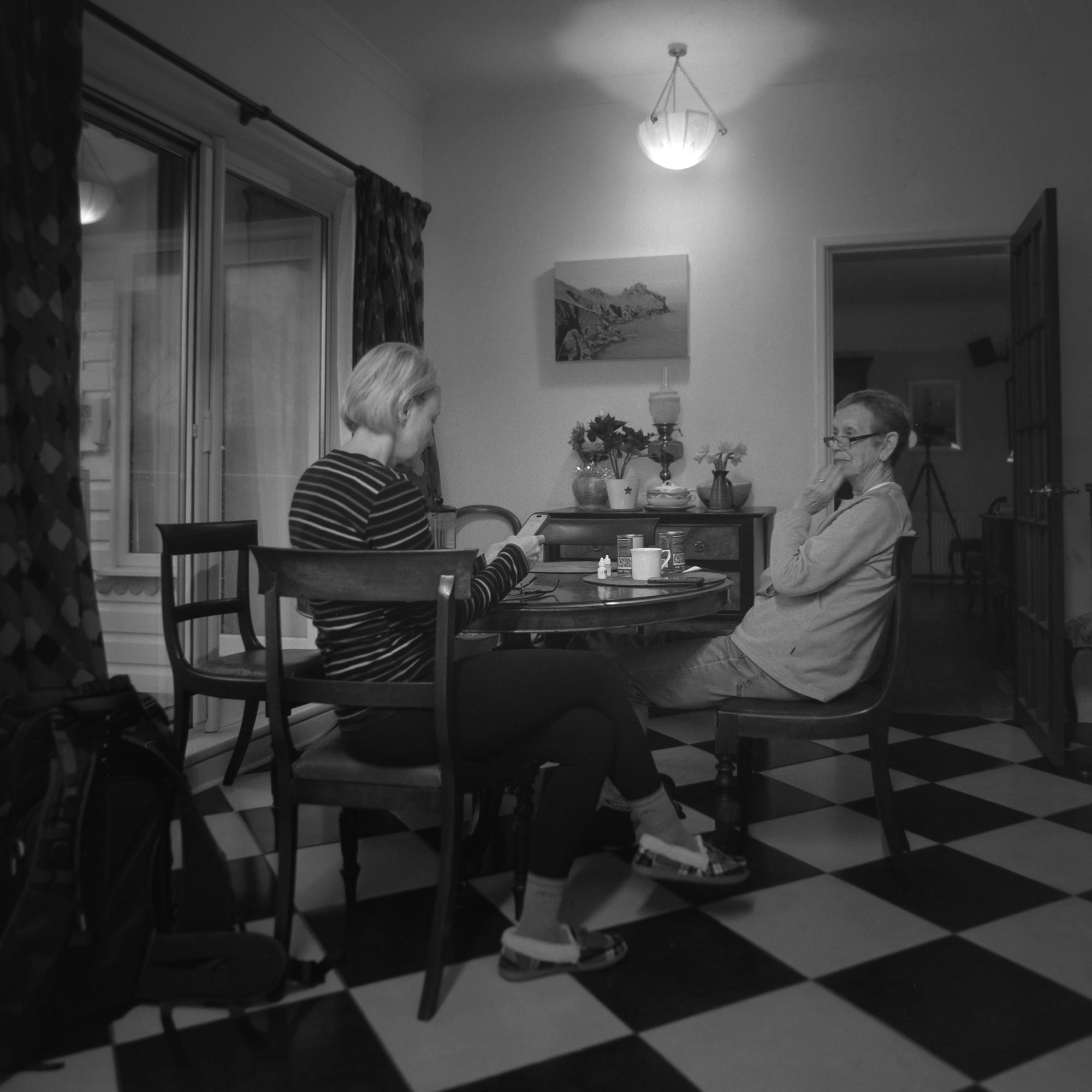
Jacquelyn and Mum, in Calstock, UK.
This photograph illustrates this responsiveness well. I made it handheld with the Hasselblad 500C/M using ISO 125 film. I used a 1/60th-of-a-second shutter speed and compensated for the low light by shooting wide open, which means an aperture of f/4 on the lens I used.
Using f/4 had two noticeable consequences. First, the short exposure meant that the film did not capture much information, and there was quite a lot of grain. But despite the grain, there is considerable detail in, for example, Jacquelyn’s phone; you can see words on the screen (remember, the image I shared is a low-resolution version of a much higher-resolution version on my screen). The whites are blown out if you look at the light hanging down. There is no detail in that area of the negative. Similarly, there is very light detail in the backpack in the lower left of the image, where the blacks lack clarity. The second noticeable consequence is the super shallow depth of focus. Look at the items on the table: the cup, the eye drops, and the tin cans are all sharp, but Jacquelyn’s slippers and the lamp behind them are all soft. The depth of focus is only 10cm or three inches. This is both the joy and the challenge of medium and large-format photography; the depth of field is very shallow at large apertures. One of the things I am very excited to explore in large-format photography is the ability to alter the focal point to bring more or less focus. It’s especially interesting for landscapes where you can get the foreground into focus by tilting the focal plane slightly down; this allows the focal range to extend from as close as a meter to infinity.
The look of this photograph is unique to film. No one will mistake it for a digital camera image. Learning how to control this aesthetic and use it artistically is one of the exciting things ahead for me on my learning journey.
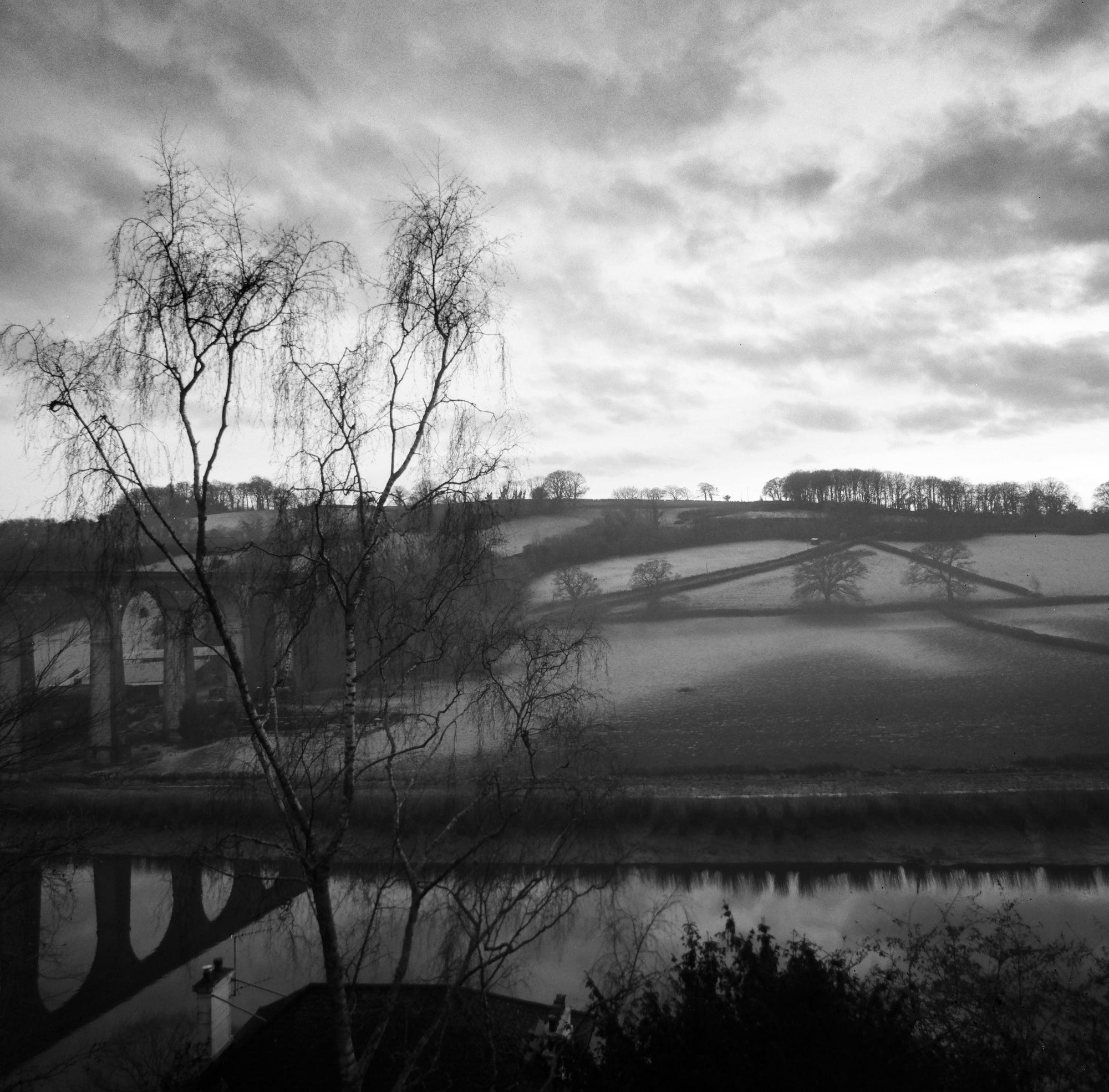
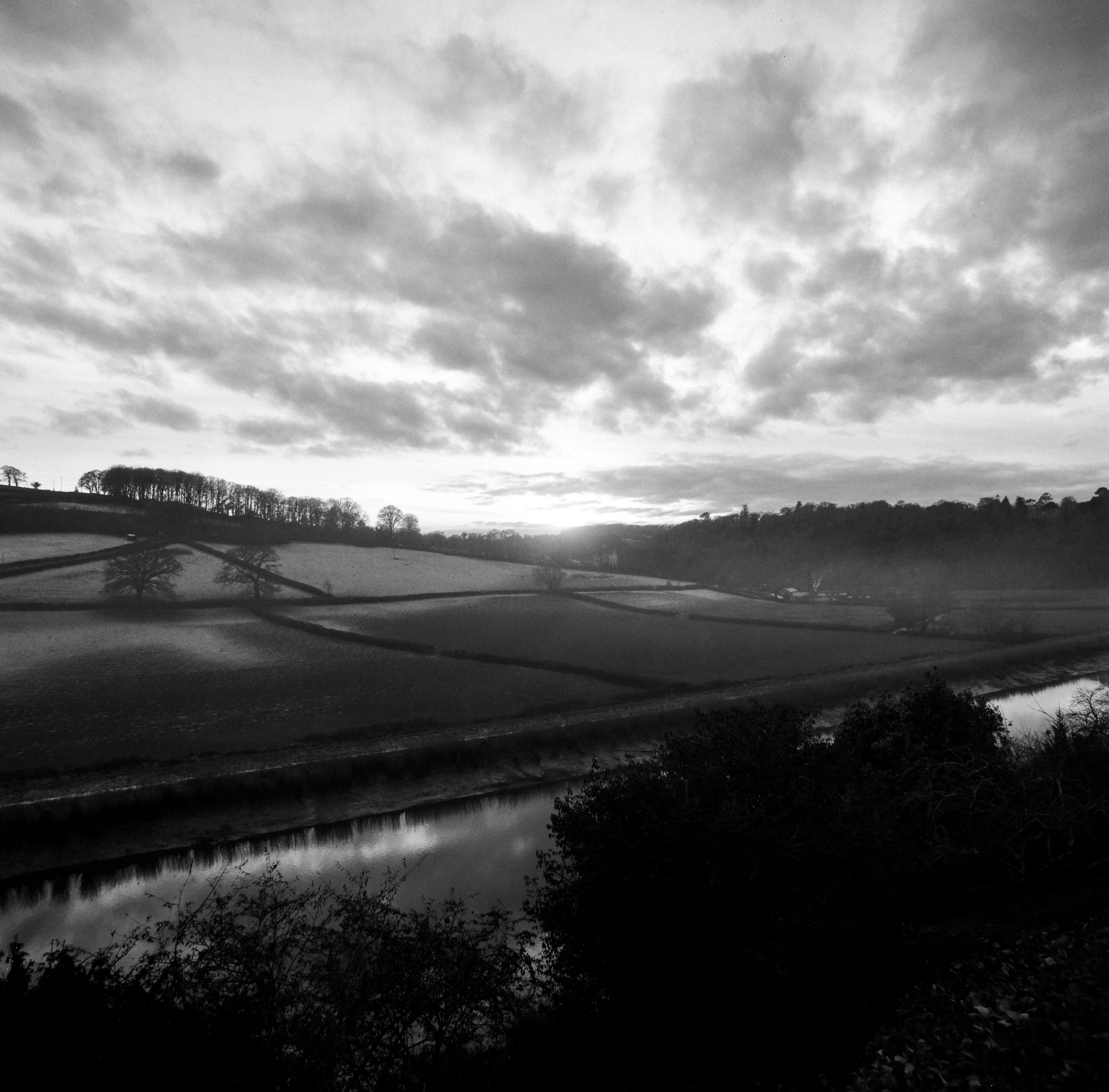
These are some of the first 12 photographs I took with the Hasselblad 500C/M I acquired from a great friend. I forgot my light meter on the trip, so all the exposures were guestimates. The camera is fully manual, and so are the lenses. Learning to focus is quite a challenge; the camera has a waist-level viewfinder, so I am squinting at a reversed image on a ground glass screen; the left is right, and the right is left. I shot the first roll handheld as I didn’t have a tripod adapter for the camera. The lens has distance markings, so I zone-focused and hoped for the best.
I am pleased with the outcome. The images are relatively sharp, the tonal range is lovely, and the grain is a pleasant addition. I have become accustomed to the incredible clarity and sharpness of my Nikon Z7ii, and these images are different, softer, and more subtle. One could argue that the Nikon is more refined, but I would hesitate to use that word. Instead, I would say the digital Nikon camera has greater clarity, and the Hasselblad has more warmth.
Tamar River Valley – Hasselblad 500C/M 40mm Distagon Ziess
The Hasselblad is considered a medium-format camera. The film is roughly two inches square, and each 120-film roll has 12 exposures. Once developed, the negatives are scanned. I paid for the “super scan” equivalent to a 45-mega-pixel resolution, the resolution of my Nikon. I noticed a lot of dust and hair on the images when I started pixel peeping (looking at high magnification), and I plan on rescanning them when I get the negatives back. Perhaps the scanner was dirty, or the film needs to be blown clean.
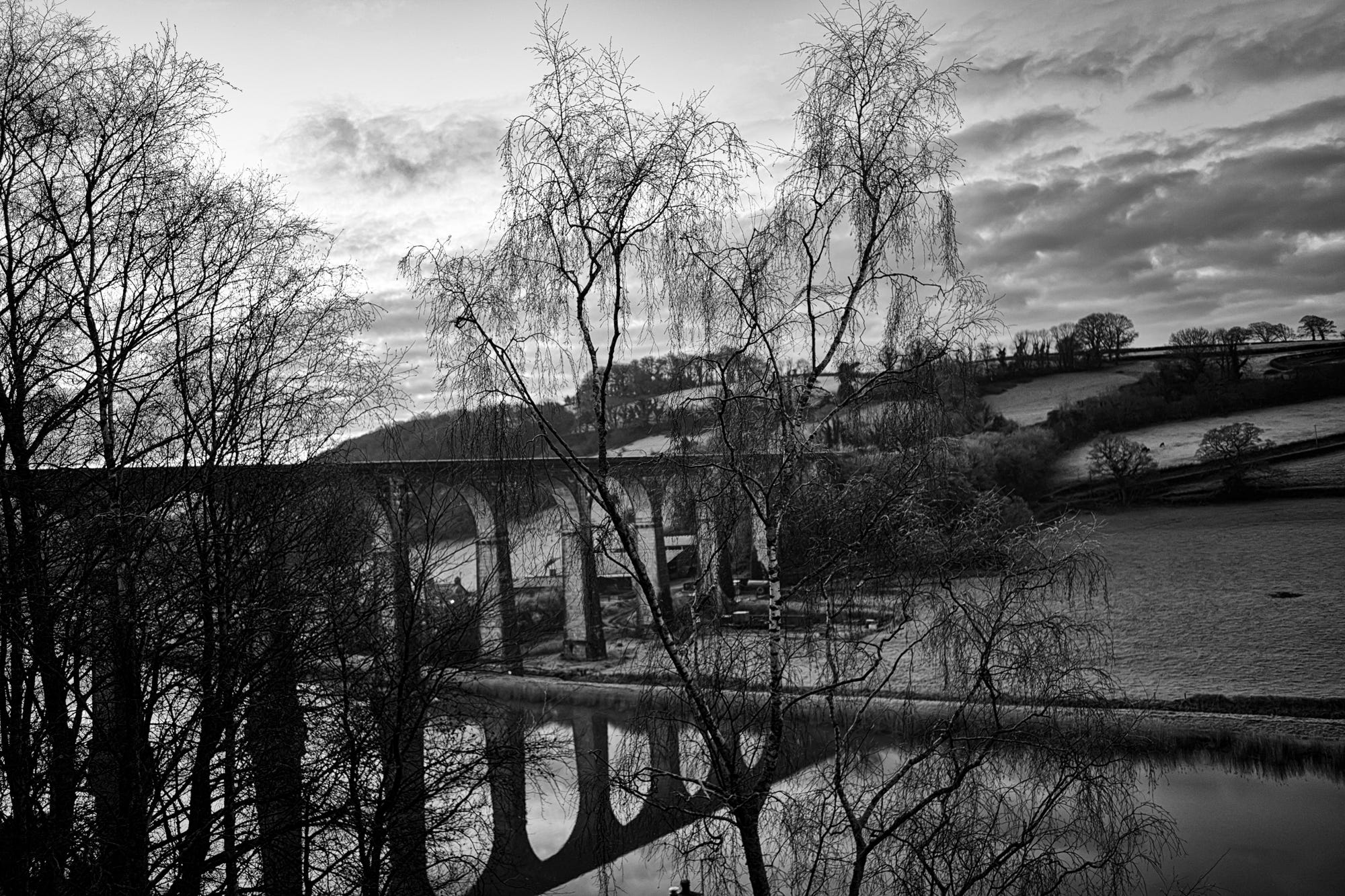
Calstock Viaduct – Nikon Z 7ii Nikkor S 24-120mm
I included this image I made using the Nikon Z7ii as a comparison so you can see the two different technologies and make your own decision.
I look forward to working on the Hasselblad and learning to get the best out of it.
Last week, I promised some photographs from north Devon, where Jacquelyn and I visited the coast at Mouthmill Beach. And yes, a mill is at the mouth of the river that leads to the beach. It’s no longer a working mill, but the building still stands. It is a gorgeous section of the coast, and we walked to it via the South West Coastal Footpath. The SWCP is on my bucket list for us to walk end-to-end one day.
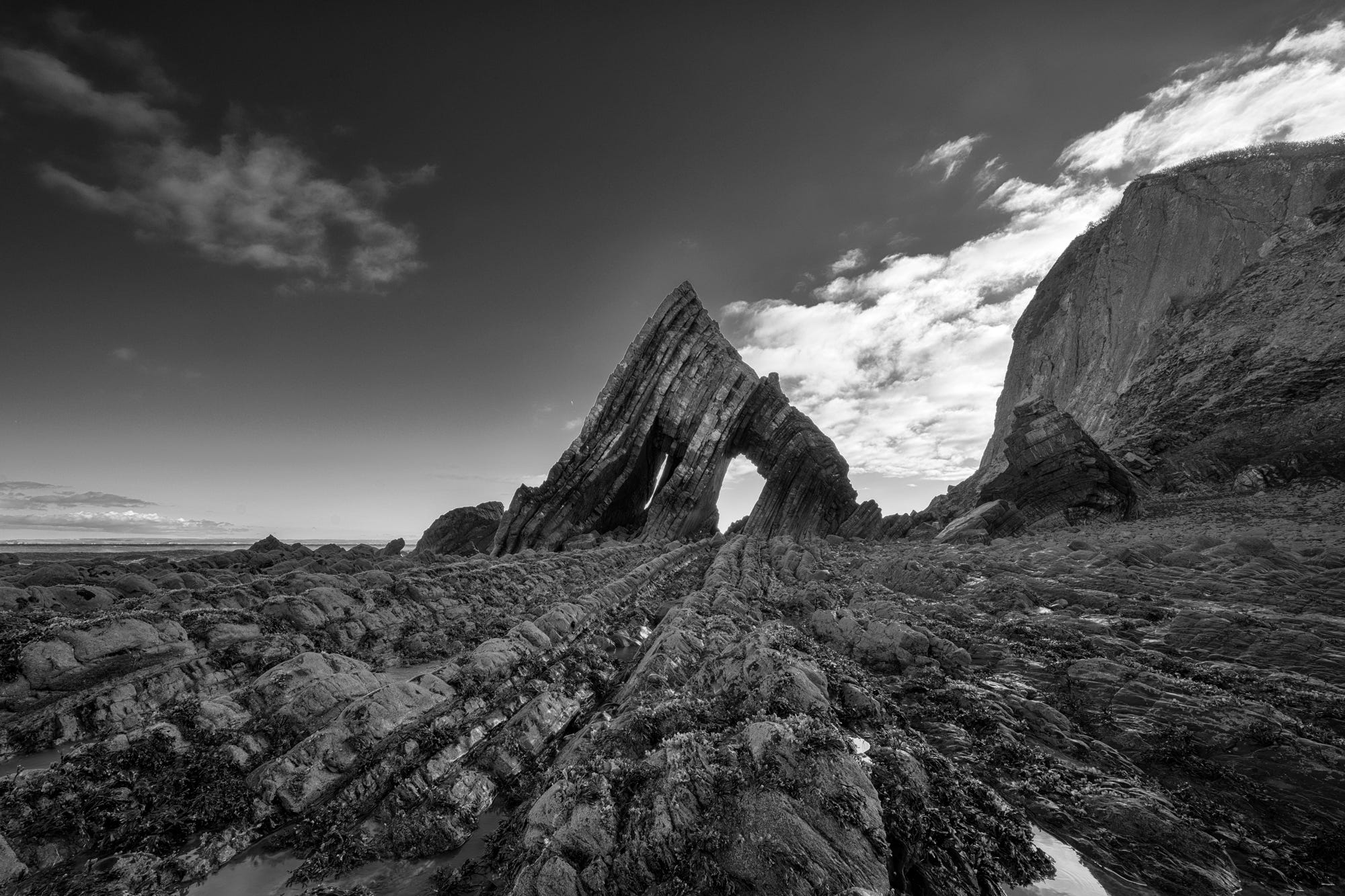
Blackchurch rock, Mouthmill beach
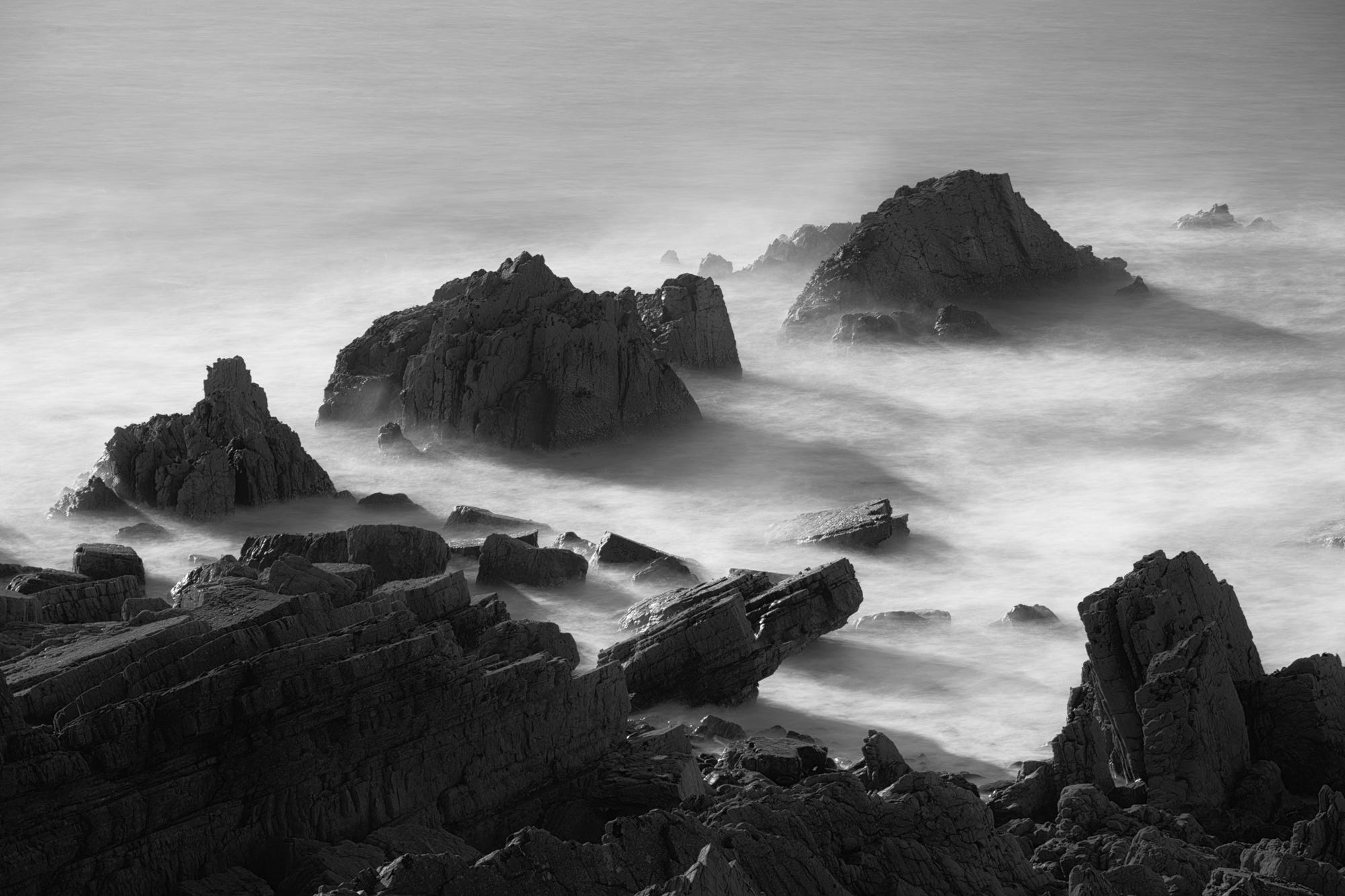
This photograph shows Blackchurch rock viewed from the west. This stunning rock is made up of leaning layers and punctured by two large caves. I have interspersed a few other photographs below for your viewing pleasure.
Aurora
I recommend listening to The River by Aurora to get in the mood. I have been listening to her music a lot lately. Her range can produce instant goosebumps for me. My other recent favourite is The Seed. The lyrics “when the last tree has fallen, and the rivers are poisoned, you can’t eat money. I stumbled across her music through a video of a concert she gave to friends and family in the woods. If you are new to Aurora, I recommend starting with the concert. You will experience her quirkiness, beauty, and talent.
Cathartic cleansing
This week, I spent far too much time and money removing visible noise from my studio office. After upgrading my network to 10Ge, I relocated all the extraneous tech—NAS, Switch, router, Wi-Fi—into the closet behind me. Visible and audible peace returned to my space. Now I am just being disturbed by one cable and too many cable clips holding it against the wall. I think a tiny conduit may be needed to illuminate the clutter.
This morning, I spent 45 minutes under my desk tidying the way all the cables run. Why? It’s just my OCD kicking in. I don’t want to see wires when I walk into my office.
Hartland Quay
Antisocial media
Furthering my quest for cleansing, I have continued to declutter my life by removing myself from Facebook, Instagram, and Threads; I also cleaned out LinkedIn of all my responses, content, etc. I am remaining connected to that platform at Jacquelyn’s suggestion. Her point is that I occasionally provide consulting within organisations, and my LinkedIn profile provides credibility to those who don’t know me.
I only actively post on Blusky, Substack, and the Foto app. It’s refreshing.
Loose USB-C
I have been chasing an intermittent issue that randomly caused my screen to disconnect from my laptop. I have tried updating software, cables, etc., and finally, it seems to be coming down to the connection on my computer—I think it occasionally wiggles and goes wrong. Frustrating, to say the least. I will blast compressed air into the connector and then try a toothpick to hold the connectors tightly together. Stay tuned for updates from your frustrated IT department.
It’s been 20 minutes since my last blank screen…
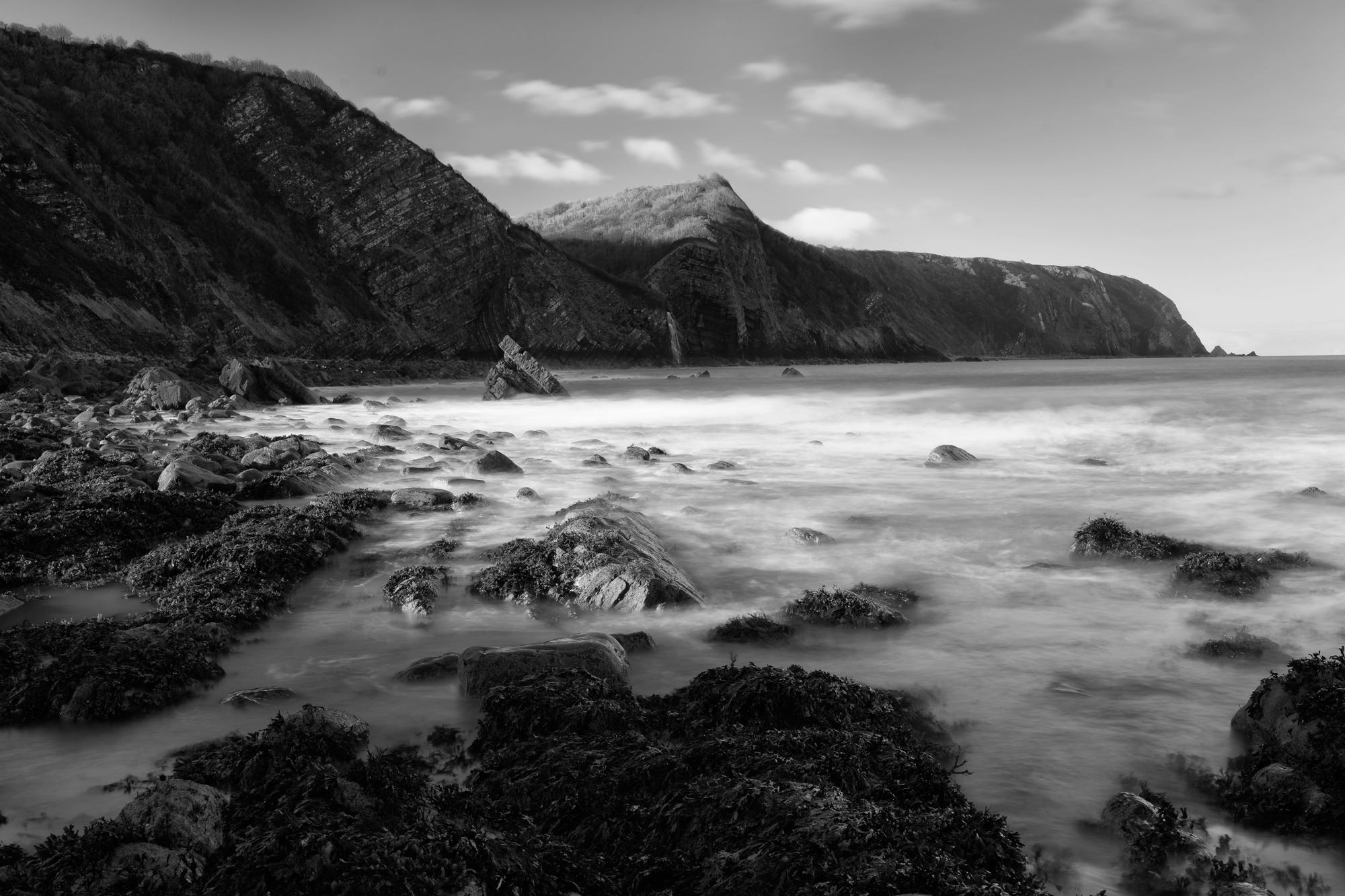
Looking westward from Mouthmill Beach.
Health concerns
I am a frustrated vegan. One of my motivations for eating plant-based is my health. I am having surgery in a week, and it is going to be an excruciating recovery. I don’t recommend rectal surgery to anyone. The surgeon has to leave the wound open to heal on its own. You can imagine the consequences of pooping… This is the second time, for different reasons. This resulted from an injury from falling down a cliff while on my way to photograph a waterfall. Thankfully, the photograph was gorgeous, but I am now rethinking whether it was worth it – ask me again in a week.
Anyway, back to plant-based eating, my pre-op reminded me I still have high cholesterol and am borderline diabetic. The cholesterol is my genetics, I have had a calcium study, and my vascular system is that of a 20-year-old. The diabetes is not helped by my having been overly sedentary for the past two months while I waited for this surgery. But still, I eat plants; my numbers should all be green, not flashing red.
Yoga
My response to this latest blood work has been to recommit to yoga. I am using Asana Rebel to guide my return to health. It provides many programmes for me to follow, and so far, I remain motivated, although this morning was particularly tough. Jacquelyn is helping me stay accountable for completing the program daily.
I am continuing to lead weekly meditations for our old yoga studio. We will start looking for a new physical studio as soon as I am healed. I miss the community of a studio.
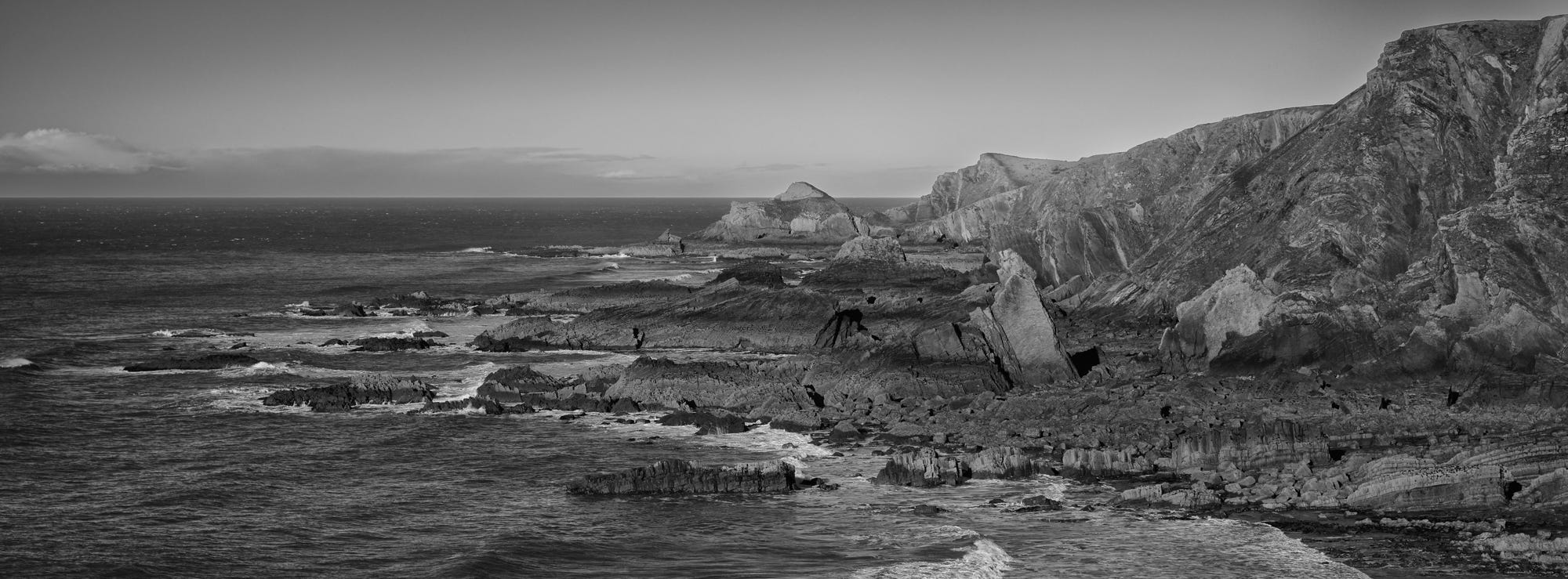
Looking Eastward from Hartland Quay
Coffee
I like coffee; it’s one of my few vices. Booze is banned, and I shouldn’t be eating crisps, chips, or chocolate. The importance of a great cup of joe is amplified these days. My brew of choice is called “North Shore Blend.” A wonderful group of people in Lutsen, MN, roasts it. Their business is called Fika Coffee. Soon, they will expand into a new facility in Grand Marais, MN. I am excited to visit it. I buy directly from their coffee shop or online at Fika Coffee // Artisanal Coffee Roaster.